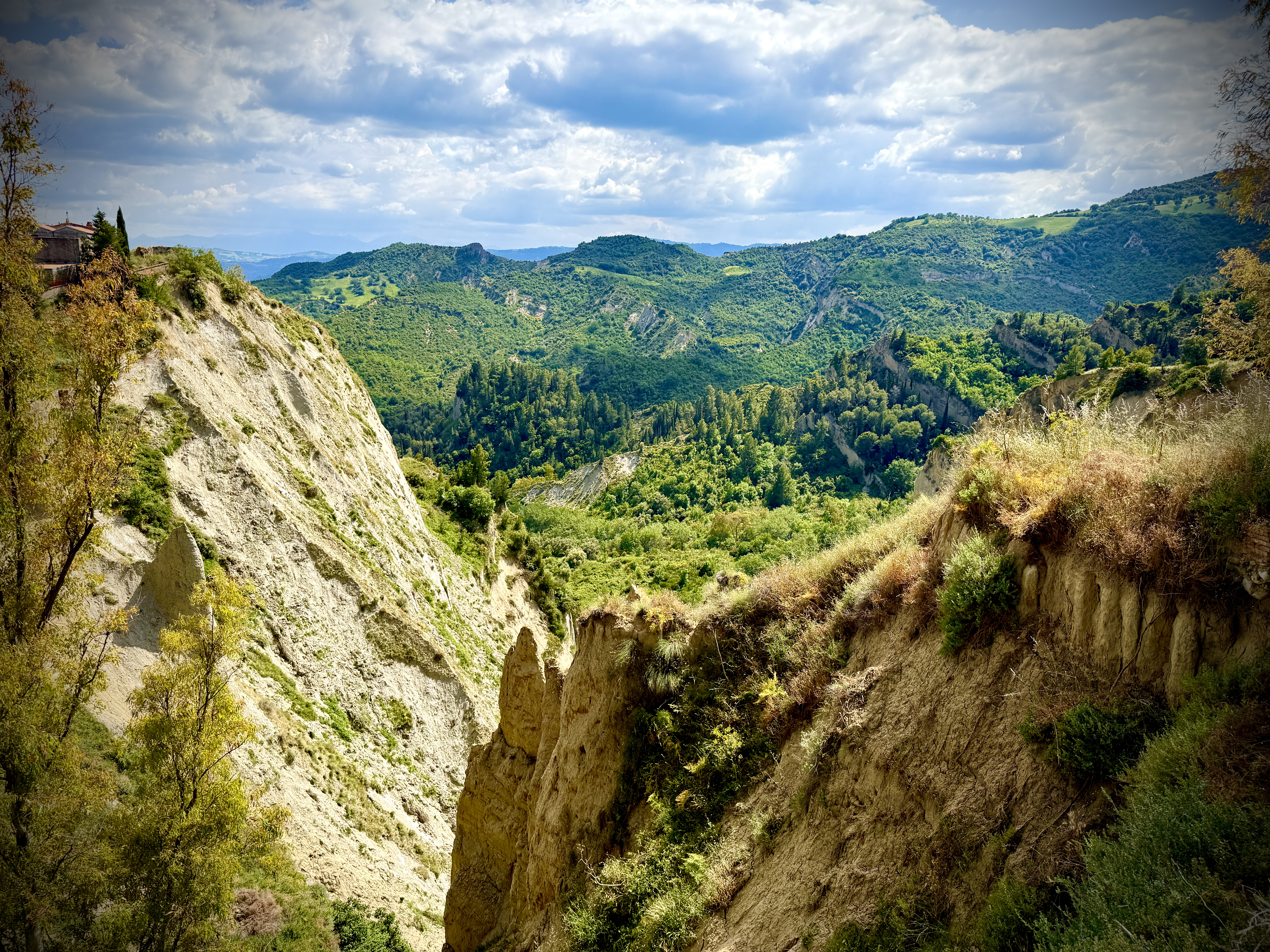
Standing above the Calanchi, you remember what it felt like to simply be present in the world — man and universe in something that feels, improbably, like sync.
We live inside a veil. Basilicata is one of the few places left that can lift it.
We live inside a veil. Not dramatically — there is no single moment when it descended.
It arrived gradually, through a thousand small surrenders: the scroll that replaced the walk, the notification that interrupted the thought, the algorithm that learned to anticipate desire before desire had time to form itself. Artificial intelligence has accelerated this beyond anything we anticipated. It is not yet autonomous. It does not yet act without us. But it is everywhere — in the tools we use, the content we consume, the decisions we defer — and its cumulative effect is a kind of malaise. A despair so ambient we have stopped noticing it as despair.
The world has been digitized. That process brought extraordinary things. It also brought a cost that we are only beginning to calculate — a slow erosion of presence, of meaning, of the sensation of being fully alive in a moment that is not mediated by a screen.
Standing above the Calanchi, you remember what it felt like to simply be present in the world — man and universe in something that feels, improbably, like sync.
There are landscapes that demand nothing of you but your presence. The Calanchi of Aliano is one of them. Standing above those pale clay ravines, stripped of signal and schedule, you feel something return — a sense of purpose, of scale, of being a human being in a universe that predates your anxiety by several million years.
The algorithmic world is designed to keep you uncertain, reactive, and dependent. Basilicata operates on different terms entirely. Here, the relationship between cause and effect is legible — between soil and wine, between stone and village, between history and the present. Clarity returns. So does the sensation of being in control of your own attention.
Basilicata did not resist modernization. It was simply bypassed by it — by prosperity, by infrastructure, by the great Italian myth machine. What remained is a culture that preserved, in that bypassing, something the rest of us lost. Not quaintness. Not poverty. But a relationship to time, to land, and to community that functions as a pharmacological counterweight to everything the digital age has taken from us.
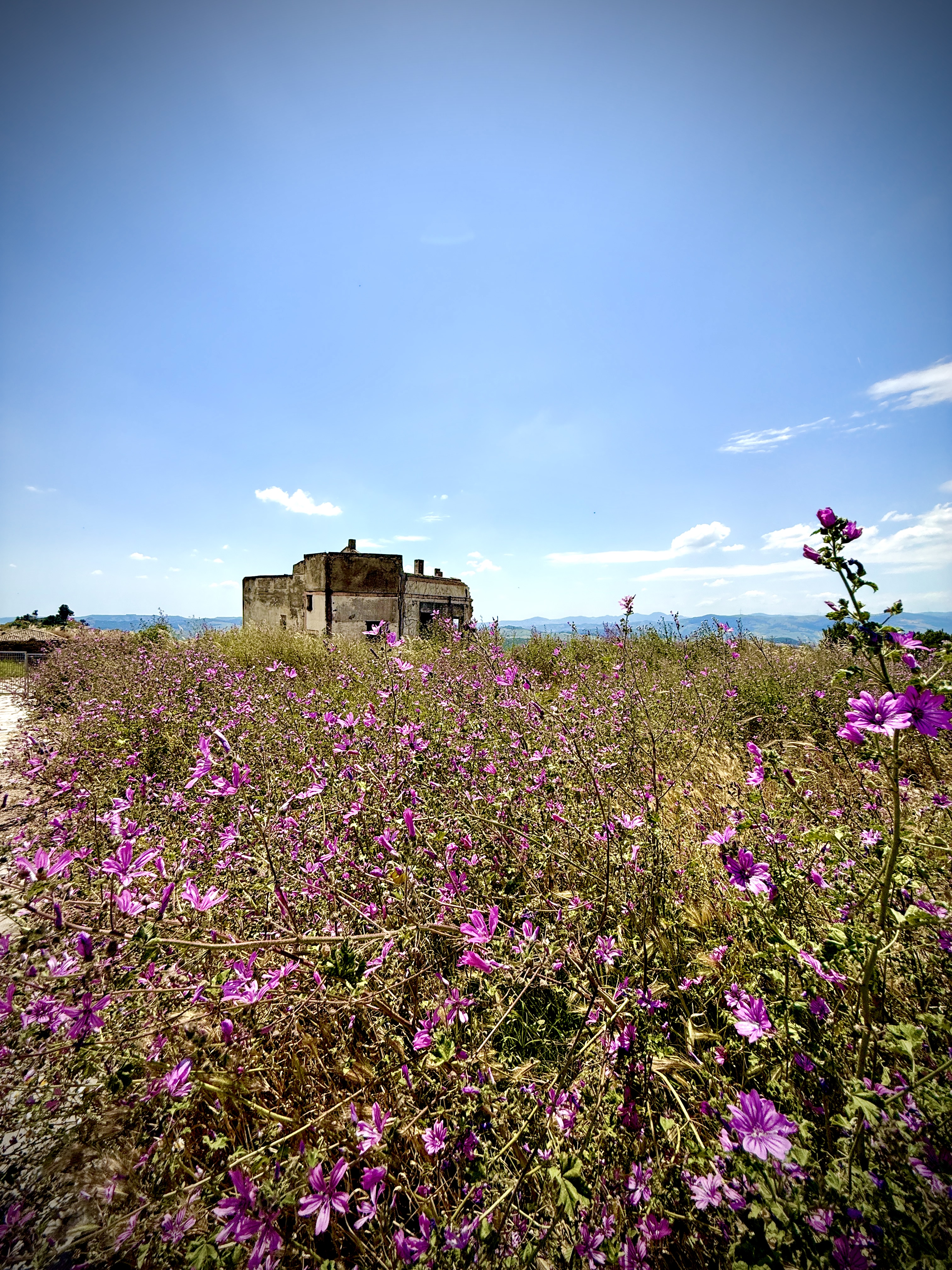
We built this site with the tools of the age we are describing. We are not against those tools. We have spent years at the frontier of digital culture — building with AI, writing about it, consulting on it. We understand what it offers. We are equally interested in what it costs.
Basilicata is not a rejection of technology. It is a recalibration. A place that reminds you what presence feels like — so that you can return to your tools with clearer eyes and a steadier hand.
The most sophisticated response to the digital age is not to abandon it. It is to periodically step outside it, long enough to remember who you are without it. Basilicata is one of the most eloquent places on earth for that kind of remembering.
This is the argument. The rest of the site is the evidence.
— Michele Colonna, founder